

Language development is not just about speaking; it’s the foundation of connection, learning, and emotional well-being. However, some children experience delays that make communication more challenging. For those families, speech therapy for kids becomes a valuable resource that offers professional support and guidance. Understanding what communication milestones to expect—and when—can help parents, educators, and caregivers identify early signs of delays. When concerns arise, speech therapy offers a pathway to help children catch up and thrive socially, academically, and emotionally.
Speech Therapy and Key Language Milestones
Language milestones serve as a roadmap for child development. These early markers help pediatricians, speech-language pathologists, and caregivers track a child’s progress and identify any deviations that might suggest a delay. While each child is unique and may reach certain milestones at different rates, a consistent pattern of missed or regressed milestones should not be overlooked. Early milestones involve more than just spoken words. They include making eye contact, responding to sounds, showing interest in faces, and using gestures to communicate. These early signs indicate that a child is engaging with the world and beginning to understand the give-and-take of communication. When these signals are absent, speech therapy for kids can provide the specialized attention necessary to build those critical early skills.
Speech Therapy for Kids and Milestones from Birth to Five
Understanding typical language development from birth to age five can help parents and caregivers recognize when a child is on track or when extra support might be needed. During these early years, children build the foundation for all future communication through critical speech and language milestones.
Birth to Six Months
The first six months of life are filled with early vocalizations such as cooing and babbling. During this time, babies begin responding to familiar voices, making eye contact, and showing interest in their caregivers’ facial expressions and tone of voice. These are subtle yet powerful indicators that a child’s communication system is forming.
Six to Twelve Months
Between six and twelve months, babbling becomes more complex. Children begin to string together sounds and may start using gestures like pointing or waving. They also show an increased understanding of simple words and frequently used phrases.
Around One Year
Many children say their first recognizable words at around one year of age. They also begin labeling familiar people and objects, responding to their names, and following simple instructions. Vocabulary grows slowly but steadily in this stage, and many children can say several words by 18 months.
Eighteen to Twenty-Four Months
Between eighteen and twenty-four months, children experience what is often referred to as a vocabulary explosion. During this time, they may quickly go from saying a few words to speaking in two-word combinations like “want toy” or “more juice.” They also begin to understand and answer simple questions, follow two-step directions, and express themselves with increasing confidence.
Two to Three Years
Sentences grow longer and more descriptive from two to three years of age. Children typically begin using pronouns like “I,” “me,” and “you” correctly and ask simple questions. Their speech becomes easier for others to understand, and they are more active participants in conversation.
Three to Four Years
By the age of three to four, children are telling short stories, describing events, and using clearer grammar. Their understanding of color, shape, and time continues to improve. At this point, most of their speech is intelligible to people outside their immediate family.
Four to Five Years
Between four and five years old, a child’s grammar and sentence structure begin to reflect more mature speech patterns. They can engage in back-and-forth conversations, express abstract ideas, and describe experiences in detail. This stage also includes improved use of complex sentence structures, greater vocabulary, and more advanced storytelling abilities.
When to Consider Speech Therapy for Kids
While it’s normal for some children to take longer than others to reach developmental milestones, certain warning signs suggest that professional evaluation may be needed. These signs include the absence of babbling by six to nine months, no words by sixteen months, or no two-word phrases by age two. Delayed comprehension, trouble following simple instructions, and difficulty understanding spoken language are also concerning indicators. Parents might also notice unclear speech that persists beyond the toddler years, limited use of vocabulary, or difficulty forming sentences typical for their child’s age. Children who do not make eye contact, rarely initiate conversation, or show limited interest in social interaction may also benefit from a speech therapy evaluation.
How Speech Therapy for Kids Moves from Evaluation to Care
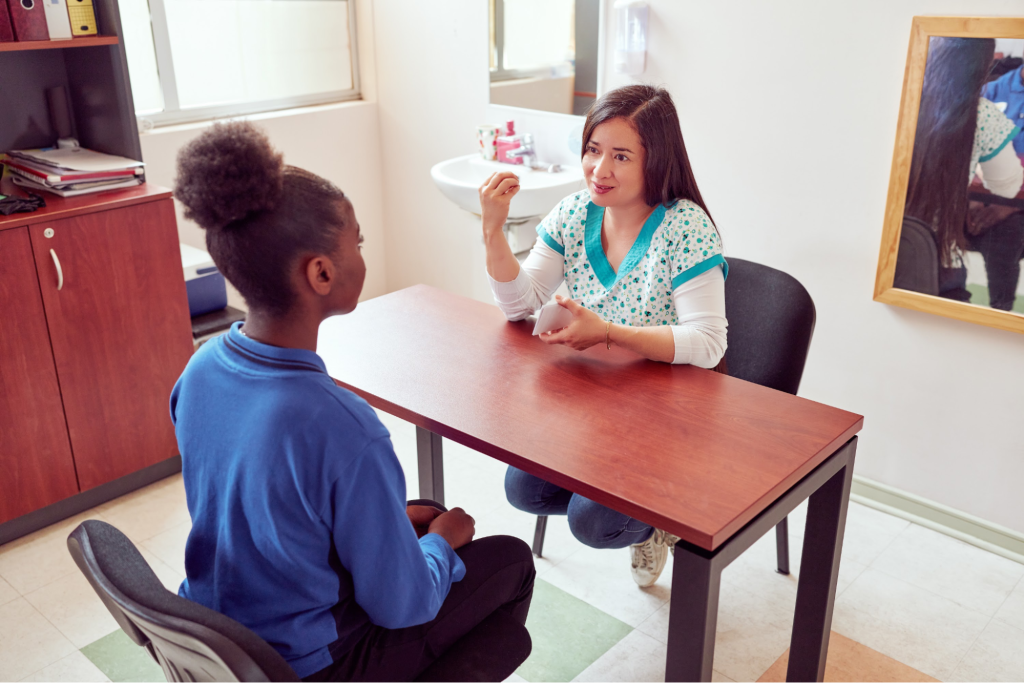
Speech therapy for kids begins with a thorough evaluation conducted by a licensed speech-language pathologist. This evaluation may include standardized assessments, informal play-based interactions, parent interviews, and observations of the child’s speech and language in natural settings. The therapist will examine multiple facets of communication, including articulation, fluency, vocabulary, comprehension, expression, and pragmatic language (social use of language). Additional areas such as oral motor skills, memory, attention, and behavior may also be assessed if they impact communication. Based on the results, a tailored treatment plan is created. This plan outlines specific goals for the child, whether it’s producing certain sounds, using more complete sentences, improving listening comprehension, or enhancing social communication.
How to Support Speech Therapy for Kids at Home
Speech therapy doesn’t stop at the clinic or school. One of the most critical components of success is the support a child receives at home. Parents and caregivers are uniquely positioned to reinforce language skills throughout the day, during playtime, mealtimes, storytime, and routines. Frequent conversations with your child can stimulate language development even if they aren’t talking yet. Narrating your actions, describing what you see, and asking questions help build vocabulary and listening skills. Reading aloud is another highly effective way to promote language, as it introduces new words and sentence structures in an engaging context. Interactive play is also essential. Toys encourage pretend play, sequencing, and problem-solving, which help children build expressive language. Simple back-and-forth games teach turn-taking and improve attention.
Speech Therapy for Kids and Common Language Disorders
Speech therapy for kids addresses a variety of communication challenges. Several types of speech and language disorders are commonly treated in children.
Articulation Disorders
Articulation disorders involve difficulty pronouncing specific sounds. A child may say “wabbit” instead of “rabbit” or omit consonants entirely.
Phonological Disorders
Phonological disorders affect sound patterns. Children may replace one group of sounds with another, like saying “tat” instead of “cat.”
Expressive Language Disorders
Expressive language disorders make it hard for children to communicate their thoughts. They may struggle with sentence structure, grammar, or word retrieval.
Receptive Language Disorders
Receptive language disorders impair a child’s ability to understand others. These children may not follow directions, answer questions, or grasp age-appropriate stories.
The Benefits of Early Speech Therapy For Kids
The earlier a communication delay is identified, the better the outcome. Early intervention supports children during the most critical years of language development. Addressing issues early takes advantage of the brain’s natural flexibility to develop stronger speech and language skills.
Builds a Strong Communication Foundation
Starting speech therapy early helps children develop core language skills before beginning school. This foundation supports future academic and social success.
Improves Academic Performance
Children receiving early support are more likely to keep up with their peers. Strong language skills contribute to better reading, writing, and comprehension.
Supports Social and Emotional Growth
More transparent communication helps children form friendships and relate to others. As their speech improves, so does their confidence and social connection.
Prevents Long-Term Struggles
Delaying treatment can lead to more severe challenges in school and social settings. Early therapy can reduce frustration and improve a child’s long-term well-being.
Encouraged by Experts
Pediatricians and educators recommend addressing concerns as soon as they arise. This proactive approach leads to more effective outcomes than waiting to see if issues resolve themselves.
School-Based vs. Private Speech Therapy For Kids
Many children receive speech therapy through their school, especially if they have an Individualized Education Program (IEP) or qualify for services under early intervention guidelines. School-based therapy is beneficial because it integrates into the child’s daily routine and often includes collaboration with teachers. However, school-based treatment may be limited in frequency or individualized attention. Some families supplement with private speech therapy for more focused sessions, specific expertise, or faster progress. Private therapists often offer more flexibility, such as one-on-one sessions, evening appointments, and specialized programs tailored to conditions like apraxia, autism spectrum disorder, or social language deficits. Regardless of the setting, the goal remains to help each child communicate to the best of their ability.
Speech Therapy Helps Kids Move Forward With Confidence
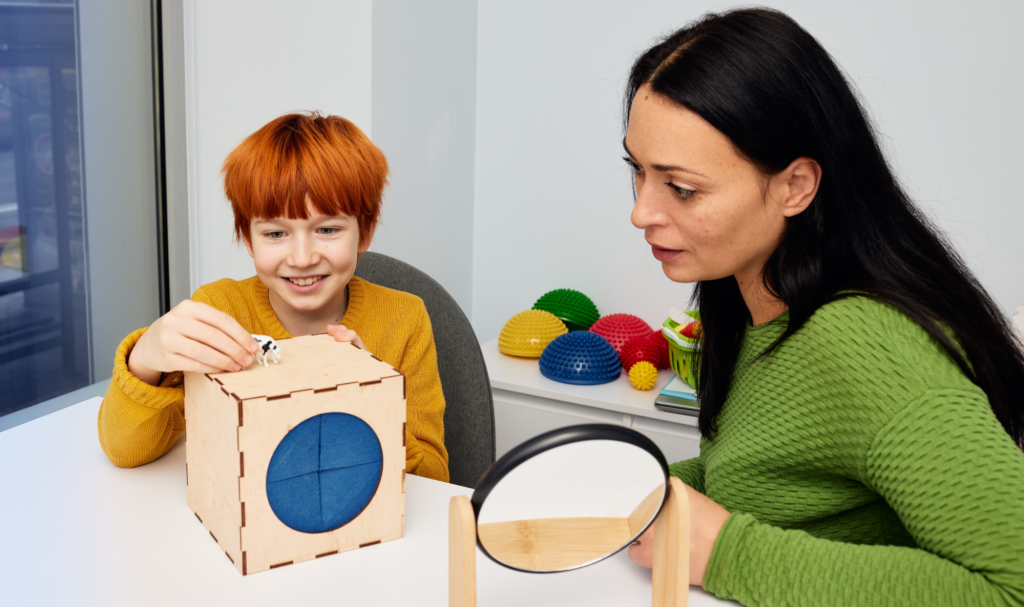
Speech therapy for kids is more than just correcting pronunciation or expanding vocabulary. It’s about empowering children to connect, express themselves, and fully engage with the world around them. With the proper support, children who experience communication delays can overcome challenges and flourish in school and life. Parents and caregivers are essential partners in this journey. By staying informed about language milestones, acting early when concerns arise, and working closely with professionals, families can ensure their children get the help they need at the right time. Speech and language skills open the door to learning, friendships, and emotional growth. With early attention and the right therapy, every child has the potential to find their voice and use it confidently.
Please visit the Oasis Rehabilitation Services blog for more information about speech therapy.