
Children grow fast, but their communication skills often fail to keep pace. Some speak later than expected, others struggle to form words, and many find it hard to understand or be understood. These issues don’t always resolve themselves over time, which can be frustrating for families. Watching your child fall behind in speech or language can feel overwhelming, but help is real and practical. Pediatric speech and language therapy works to close that gap early and meaningfully.
Understanding Pediatric Speech and Language Therapy
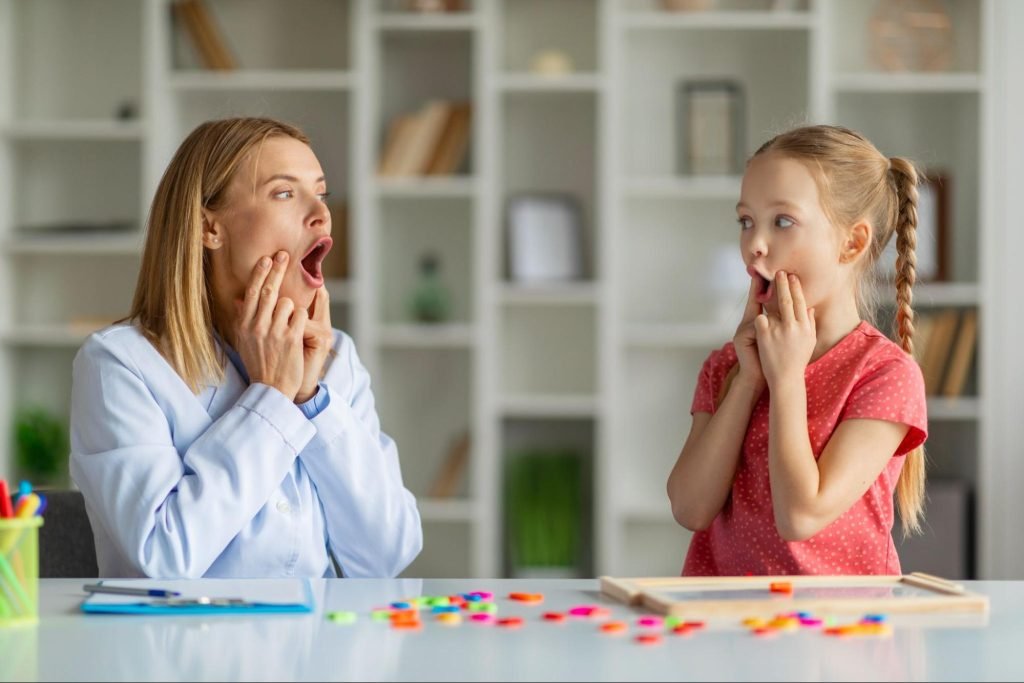
Speech and language therapy for children supports clear communication and understanding. It helps young patients overcome barriers that affect their ability to speak, listen, socialize, or learn. A licensed speech-language pathologist (SLP) assesses each child’s specific needs. With a personalized approach, they build skills that help the child connect with the world around them.
Speech Disorders Treated by Speech and Language Therapy
Children with speech disorders struggle to produce sounds correctly. It can make their speech hard to understand, which affects learning and confidence. Therapy focuses on improving the formation of words and sounds. The goal is clear speech that supports social and academic development.
Articulation Disorders in Pediatric Speech Therapy
Articulation disorders make it difficult for children to form specific sounds. They might substitute one sound for another or skip certain sounds altogether. A child may say “wabbit” instead of “rabbit” or “thun” instead of “sun.” These errors are normal at certain ages but become concerning if they persist. Speech therapy targets these patterns and teaches individuals to produce sounds correctly.
Fluency Disorders Like Stuttering in Children
Fluency disorders involve disruptions in the flow of speech. Stuttering is the most common form seen in children. It includes repetition of sounds, blocks, or long pauses while speaking. These patterns often worsen under stress or excitement. Therapy helps children speak more smoothly and gain control over these disruptions.
Pediatric Voice Disorders in Speech Therapy
Voice disorders involve problems with pitch, volume, or vocal quality. A child may sound hoarse, too soft, or strained when speaking. It can result from vocal misuse, illness, or conditions like vocal nodules. Therapy teaches safe vocal habits and may include exercises to strengthen the voice. A healthy voice improves comfort and communication.
Language Disorders Treated by Speech and Language Therapy
Language disorders affect how children understand or use words. These issues may not be immediately apparent, but they can have a profound impact on a child’s readiness for school. Children might speak late, have trouble following directions, or use short, incomplete sentences. Therapy addresses both understanding (receptive) and expression (expressive) of language.
Expressive Language Disorders in Children
Children with expressive language disorders often struggle to articulate their thoughts clearly and effectively. Their vocabulary may be limited, and they might use short or ungrammatical sentences. They usually find it hard to answer questions or retell stories. Therapy builds sentence structure, expands vocabulary, and encourages storytelling. Progress is measured by how well a child begins to organize and express ideas.
Receptive Language Disorders in Pediatric Patients
A receptive language disorder makes it hard for a child to understand others. They may not follow instructions or answer questions correctly. These children often appear distracted or uncooperative, though the issue lies in comprehension. Therapy focuses on listening skills, concept development, and following directions. Understanding language is a foundation for learning and social success.

Pragmatic Language Disorders and Social Challenges
Pragmatic language affects how children use language in social situations. Children with this disorder may struggle to take turns in conversation, stay on topic, or interpret body language. They may speak off-topic or use language that seems awkward or inappropriate. It often occurs in children with autism or ADHD. Therapy involves role-playing and direct teaching of social rules.
Neurological Issues in Speech and Language Therapy
Children with neurological issues often face speech or language delays. These may result from injury, illness, or developmental differences. Therapy supports communication recovery and teaches new ways to interact. Early treatment can remarkably improve daily life and learning outcomes.
Aphasia in Children After Brain Injury
Aphasia is rare in children but can occur after a stroke or trauma. It affects the ability to speak, understand, read, or write. The child may know what they want to say but struggle to find the words. Therapy builds on remaining skills while teaching new communication strategies. Recovery depends on the type and severity of brain damage.
Cognitive-Communication Disorders in Pediatric Patients
Cognitive communication disorders affect how children think and speak. They may experience difficulties with attention, memory, or problem-solving, which can impact their communication. These issues can result from a brain injury, epilepsy, or neurological condition. Therapy combines speech tasks with cognitive challenges to strengthen both areas of communication. Daily routines help practice these skills in real-life settings.
Apraxia and Dysarthria Treated in Therapy
Motor speech disorders involve physical challenges with speaking. Apraxia affects speech planning, while dysarthria involves weak or slow muscles used for speech production. Children may speak in a flat tone, sound slurred, or struggle to say longer words. Therapy focuses on repetition, motor practice, and sometimes assistive tools. Clear speech often requires long-term, consistent treatment.
Developmental Delays Treated by Speech and Language Therapy
Some developmental conditions cause ongoing speech or language challenges. These conditions may affect one or multiple areas of communication. Therapy helps by targeting what the child needs most. With consistency, many children can reach meaningful progress.
Speech Delay in Early Childhood Development
Speech delay refers to a child speaking later than expected. They may use fewer words or stay silent beyond age milestones. Causes vary and can include hearing loss or no apparent reason at all. Therapy stimulates language growth through play, interaction, and modeling. Parents are also guided to encourage speech at home.
Autism-Related Language Disorders in Children
Children with autism often show unusual speech or language patterns. They may repeat phrases, use a flat tone, or avoid speaking. Nonverbal communication, like gestures or eye contact, may also be limited. Therapy builds functional communication using pictures, devices, or spoken words. Progress depends on individual needs and support at home.
Developmental Language Disorder (DLD) in Children
DLD affects language skills without an apparent cause, like autism or hearing loss. These children may seem shy or quiet, but the issue is deeper. They often struggle to learn new words or use grammar correctly. DLD can affect reading, writing, and classroom success. Long-term therapy supports steady improvement over time.

How Speech and Language Therapy Supports Academic Success
Children with speech or language issues often struggle in school beyond just talking. They may struggle to follow instructions, answer questions, or remain engaged in lessons. Reading and writing also suffer when language isn’t strong. Speech and language therapy strengthens the core skills children need to learn effectively.
Language Skills and Early Literacy Development
Language and literacy are tightly connected from an early age. A child who can’t follow a story or describe events may also struggle with reading comprehension. Therapy helps build vocabulary, sentence structure, and sequencing, which are key elements for literacy success. This support enables children to decode texts, comprehend questions, and write clearer responses. These gains boost confidence and classroom performance.
Improving Attention and Classroom Participation
Many children with communication difficulties also struggle with staying focused and interacting with their peers. They may hesitate to raise their hand or answer when called on. Speech therapy includes structured routines that build confidence in responding and participating. As communication improves, so does a child’s ability to stay involved in class. This progress leads to better overall learning outcomes.
Cultural and Bilingual Factors in Speech and Language Therapy
Language development can take on a distinctly different form in bilingual or multicultural homes. Children exposed to more than one language may mix them, speak one more fluently, or develop both at a different pace. These patterns are often standard, but they can also mask or mimic an actual language delay. Speech and language therapy takes into account cultural and linguistic backgrounds to avoid misdiagnosis and tailor support effectively.
Bilingual Language Development Versus Delay
Many parents worry when their bilingual child starts speaking later than their peers. That is common and usually not a disorder. Bilingual children may take longer to sort out the rules of each language. That delay is temporary and doesn’t mean therapy is needed. A speech-language pathologist can help determine whether the issue is developmental or a regular part of bilingual growth.
How Culture Shapes Communication Norms
Every culture has its own way of using language; some cultures encourage storytelling, while others value listening. Tone, eye contact, and gestures can mean different things in different communities. A therapist trained in cultural awareness considers these norms during evaluation and treatment. This approach helps avoid misunderstandings and builds trust. Respect for cultural diversity improves therapy success.
Adapting Therapy for Multilingual Environments
Therapy doesn’t require a child to stop using their home language. Maintaining a strong first language supports the overall development of communication skills. Therapists often work with both languages, primarily when the child uses one at home and another at school. Sessions may include bilingual tools, interpreters, or parent coaching. The goal is to develop skills across all languages the child uses on a daily basis.
Start Speech and Language Therapy Before the Gap Widens
A child’s voice isn’t just about sound; it’s how they connect, ask for help, build friendships, and learn who they are. When communication feels blocked, it doesn’t just delay speech; it delays connection. That gap only gets wider the longer it’s ignored. Taking the first step toward speech and language therapy is giving your child the tools to step into the world with clarity and confidence, not just treatment. Don’t wait for the struggle to grow louder before listening to what silence is trying to say.
Stay informed and empowered. Visit the Oasis Rehabilitation Services blog for trusted advice on speech and language therapy.